

Villefranche-sur-Mer sits on one of the most celebrated stretches of the French Riviera, nestled between Nice and Monaco, where a natural deep-water harbour meets a colourful old town and hillside residences with sweeping sea views. For many international buyers and families considering a move to the south of France, vivre à Villefranche-sur-Mer – living in Villefranche-sur-Mer – represents a rare balance: authentic Provençal character combined with proximity to world-class infrastructure.
The town belongs to the Alpes-Maritimes department (postcode 06230) and consistently ranks among the most sought-after coastal addresses on the Côte d’Azur. Whether you are exploring a primary residence, a second home, or simply weighing your options, this guide covers everything you need to know before making your decision.
Vivre à Villefranche-sur-Mer | Living in Villefranche-sur-Mer – Complete 2026 Guide
Reading time: ~10 min
- Summary at a glance
- Is Villefranche-sur-Mer a good place to live?
- Cost of living in Villefranche-sur-Mer
- Villefranche-sur-Mer real estate: market overview and property prices
- Best neighbourhoods in Villefranche-sur-Mer
- Who is Villefranche-sur-Mer for?
- Pros and cons of living in Villefranche-sur-Mer
- Buying vs renting in Villefranche-sur-Mer
- Making the move to Villefranche-sur-Mer
- Frequently asked questions
Summary at a glance
- Living in Villefranche-sur-Mer: what makes this town genuinely attractive for residents and expats.
- Cost of living: housing is the dominant expense, with property prices and rents well above national averages.
- Real estate market: a prime residential market with strong international buyer demand and limited supply of sea-view properties.
- Best neighbourhoods: Le Port, Col de Villefranche and Mont Leuze each offer a distinct lifestyle and price point.
- Who is it for: retirees, second-home buyers, families and expats will find different but compelling reasons to settle here.
- Pros and cons: exceptional setting and connectivity, offset by high housing costs and seasonal tourist activity.
- Buying vs renting: a practical overview to help you decide which route suits your situation.
Is Villefranche-sur-Mer a good place to live?
Quality of life and connectivity
The short answer is yes, for those who value coastal beauty, quality of life and convenient access to two of Europe’s most dynamic urban centres. Nice Côte d’Azur International Airport is roughly 15 minutes by car via the A8 motorway (La Provençale), and Monaco Principality is a 20-minute drive along the corniche road. The coastal rail line connects the town to both cities quickly and affordably. Within Villefranche-sur-Mer itself, the vieille ville (old town) offers a genuine neighbourhood feel: morning markets, independent restaurants, a working fishing port and a relaxed pace that larger resort cities rarely preserve.

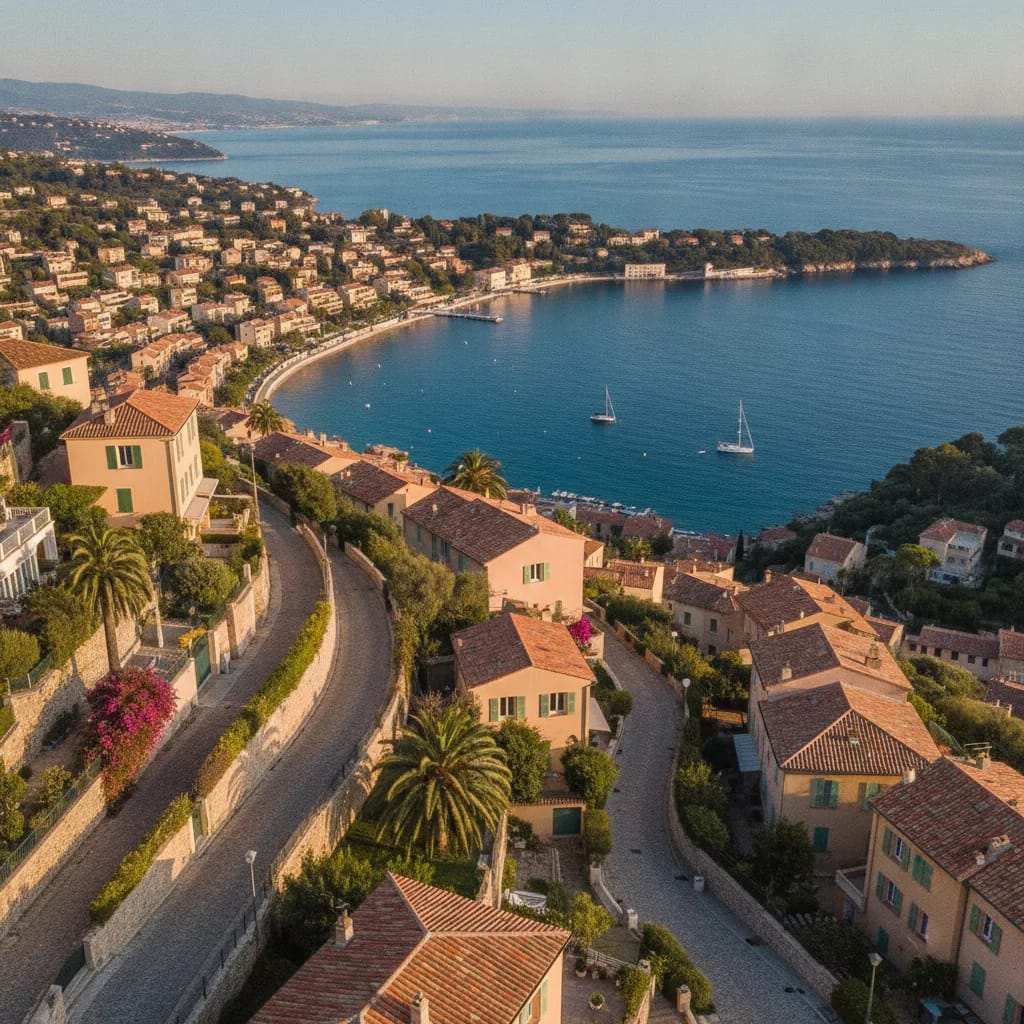
The Baie de Villefranche is widely considered one of the most beautiful bays in the Mediterranean. Its sheltered waters attract sailing enthusiasts, divers and those who simply enjoy watching the light change over the sea throughout the day. The surrounding hills are dotted with hillside residences and gated estates that command panoramic sea views, many of them within a short drive of the town centre. For families relocating from the United States or northern Europe, the combination of a safe environment, good local schools and easy access to international facilities in Nice is a significant draw.
For those considering living in Villefranche-sur-Mer long term, it is worth noting that the town is small by design. It has roughly 8,000 permanent residents, which means the social fabric is tight and services, while adequate, are more limited than in Nice. Larger healthcare facilities, international schools and specialist services are available in Nice, typically 20 to 30 minutes away.
Cost of living in Villefranche-sur-Mer
Housing, rentals and daily expenses
Housing is by far the largest cost driver in Villefranche-sur-Mer. Everyday expenses such as groceries, dining and transport are broadly comparable to other Côte d’Azur resort towns and to Nice, but the property market operates at a significantly higher level than the national French average.
For long-term rentals, data from multiple analytics platforms indicates average rents in the range of €22 to €30 per square metre per month. In practical terms, a well-maintained apartment of 65 to 70 square metres can be expected to rent for approximately €1,400 to €2,000 per month depending on its location, condition and whether it offers a sea view. Renovated properties with direct views over the Baie de Villefranche command a clear premium. The seasonal rental market, driven by high demand from tourists and short-stay visitors, also influences the availability of long-term stock, which can make finding a suitable rental property more competitive than in inland towns.
Beyond housing, the cost of living is consistent with a prosperous French coastal town. Local markets, bakeries and restaurants are plentiful in the old town, and day-to-day spending is not dramatically higher than in Nice or Beaulieu-sur-Mer. The main financial consideration for anyone planning a move here is securing appropriate housing, whether rented or purchased, within a market that reflects strong international buyer demand and limited supply.
Villefranche-sur-Mer real estate: market overview and property prices
Price levels and market dynamics
The Villefranche-sur-Mer real estate market is firmly positioned in the prime residential segment of the French Riviera. According to data drawn from DVF (Demandes de Valeurs Foncières), the official French transaction database, and corroborated by multiple property analytics platforms, average prices per square metre for 2025 to 2026 are as follows:
| Property type | Average price per m² (market) | Range (standard to prime) |
|---|---|---|
| Apartments | €8,700 to €8,800/m² | €6,000 to €14,000/m² |
| Houses and villas | €11,800 to €12,500/m² | €5,200 to over €23,000/m² |
| Prime apartments (sea view, renovated) | €11,000 to €20,000/m² | Up to €40,000/m² for gated estates |
| Luxury waterfront villas | €50,000 to €60,000/m² (panoramic view) | Up to €80,000/m² for sea-front homes |
Sources: DVF transaction data, Savills prime market research, Seloger, PAP, Trackstone, RealAdvisor (2025 to 2026 data).
A slight price correction of approximately 5.4% was recorded between 2023 and 2024, but values have remained at very high levels compared to both the national average and most other Mediterranean coastal towns. The renovation premium is significant: a property in need of updating will trade at a meaningful discount relative to a fully refurbished equivalent with comparable views and location. International buyer demand, particularly from Anglo-Saxon and northern European buyers, continues to sustain price levels, while the limited supply of prime sea-view property prevents any sustained downward pressure.
For those comparing Villefranche-sur-Mer vs Nice real estate, the key distinction is density and character. Nice offers a broader range of price points and a larger urban market, but Villefranche-sur-Mer’s coastal micro-market is more exclusive, with fewer transactions and a higher proportion of second-home buyers and international purchasers. Beaulieu-sur-Mer and Saint-Jean-Cap-Ferrat (Cap Ferrat) sit in a comparable prestige bracket, with Cap Ferrat representing the absolute apex of the regional prime market.
Best neighbourhoods in Villefranche-sur-Mer
Key residential areas to compare
The town is compact, but meaningful differences exist between its main residential areas. RealAdvisor’s neighbourhood-level price data (2025) provides a useful reference.
| Neighbourhood | Apartments (avg €/m²) | Houses (avg €/m²) |
|---|---|---|
| Le Port | €10,200 | €11,800 |
| Col de Villefranche | €9,600 | €10,900 |
| Mont Leuze | €9,400 | €10,300 |
Le Port is the most central and sought-after area, offering direct access to the harbour, the old town and the seafront. It is the natural choice for buyers who want to walk to restaurants, the market and the beach.
Col de Villefranche sits slightly higher on the hillside, offering a quieter residential environment with good road access to both Nice and Monaco, reflecting the trade-off between tranquillity and immediate seafront access.
Mont Leuze is positioned further inland and at greater elevation, providing panoramic sea views over the bay without the density of the lower town. This area appeals to buyers prioritising space, privacy and views over walkability.
For buyers with a significant budget, gated estates and prestige properties near the corniche roads and the boundary with Saint-Jean-Cap-Ferrat represent the upper end of the local market, where prices are determined individually rather than by neighbourhood averages.
Who is Villefranche-sur-Mer for?
The town attracts a specific profile of resident. Retirees and second-home buyers from the United States, the United Kingdom and northern Europe make up a substantial portion of property transactions. The combination of a safe, manageable environment, excellent climate, and proximity to Nice and Monaco suits those who want Côte d’Azur resort lifestyle without the pace of a large city.
Families relocating from abroad will find the town welcoming, with local schools, a close-knit community and outdoor activities that suit children. However, families requiring international schools or specialist educational provision will need to factor in the commute to Nice, where such facilities are concentrated.
Expats moving to Villefranche-sur-Mer for the first time often cite the language barrier and the complexity of the French legal and administrative system as their primary concerns. Navigating the buying process, understanding the role of the notaire, and managing the fiscal implications of property ownership in France as a foreign national are areas where professional guidance is strongly recommended. At Riviera King, we work exclusively with English-speaking buyers to ensure that every step of the transaction is clear, secure and properly managed.
Pros and cons of living in Villefranche-sur-Mer
No location is without trade-offs. Here is an honest assessment of what residents consistently highlight.
The advantages are substantial. The natural setting, centred on the Baie de Villefranche and its deep-water harbour, is genuinely exceptional. Connectivity to Nice and Monaco is excellent by both road and rail. The old town preserves an authentic character that is increasingly rare on the Riviera. The climate is mild year-round, with over 300 days of sunshine annually. Property values in this prestige market have demonstrated long-term resilience, and capital appreciation over time has historically been a feature of well-chosen assets in this coastal micro-market, though past performance does not guarantee future outcomes.
The challenges are worth acknowledging. Housing costs, whether renting or buying, are among the highest in France. The town becomes significantly busier during summer months, when seasonal rental demand peaks and tourist activity intensifies. Parking and road access along the corniche can be difficult in high season. The range of everyday services is limited compared to Nice, and residents who rely on specialist healthcare, international retail or a wide cultural programme will need to travel regularly.
Buying vs renting in Villefranche-sur-Mer
This is one of the most common questions among those considering a move to the area. The answer depends largely on your timeline, financial situation and long-term intentions.
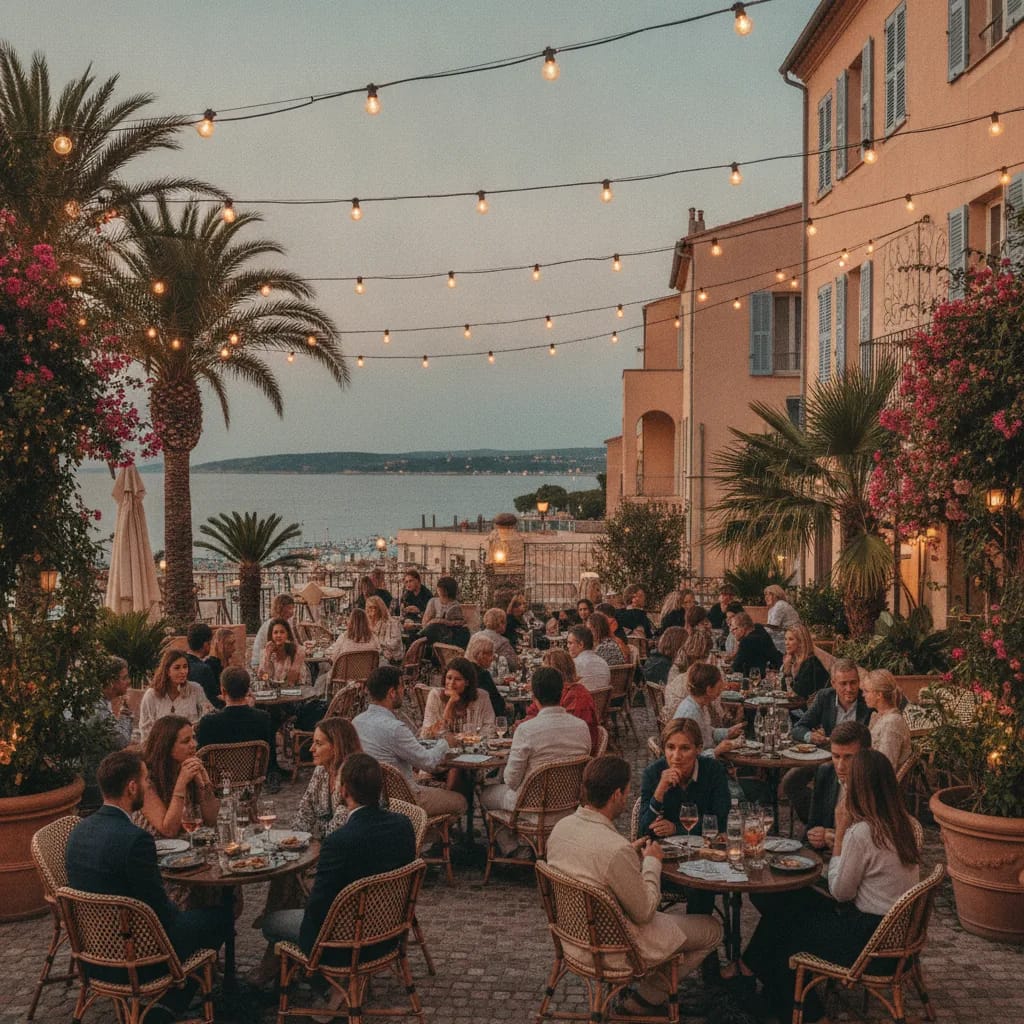
Renting makes practical sense if you are new to the area and want to experience different neighbourhoods before committing to a purchase. The rental market in Villefranche-sur-Mer is active but tight, particularly for quality long-term lets. Expect to pay a premium for any property with a sea view or a renovated interior. Renting also allows you to avoid the upfront costs of acquisition, which in France include notarial fees typically representing 7% to 8% of the purchase price for existing properties.
Buying is generally the preferred route for those planning to stay for five years or more, or for second-home buyers who want to benefit from the area’s long-term appeal and limited supply. The French property transaction process is rigorous and well-regulated, with the notaire playing a central role in guaranteeing the legal security of the transaction. Foreign buyers are fully entitled to purchase property in France, though the fiscal and succession implications of ownership as a non-resident should be discussed with a qualified professional before any commitment is made.
For anyone at the stage of seriously evaluating buying property in Villefranche-sur-Mer, working with a specialist who understands both the local market and the specific needs of international buyers is a significant advantage. Riviera King focuses exclusively on accompanying English-speaking buyers through every stage of the process, from initial search to final signature.
Making the move to Villefranche-sur-Mer
Villefranche-sur-Mer is one of the most compelling addresses on the French Riviera, combining an exceptional natural setting with strong connectivity, a genuine community atmosphere and a prime residential market that continues to attract discerning buyers from around the world. It is not the right choice for everyone: the cost of living is high, services are more limited than in a large city, and the buying process in France requires careful navigation.
But for those who are drawn to Côte d’Azur seaside living at its most authentic, it is difficult to find a comparable alternative between Nice and Monaco. If you are considering a move or a purchase in this area, taking the time to understand the market thoroughly, and securing the right professional support, will make all the difference.
Frequently asked questions
Do I need to speak French to live in Villefranche-sur-Mer?
French is the official language and is used in all administrative and legal processes. In daily life, many residents and business owners in Villefranche-sur-Mer speak English, particularly in the property, hospitality and service sectors. However, for official procedures such as property transactions, tax filings or residency applications, working with a bilingual professional or specialist adviser is strongly recommended.
Can a US citizen buy property in Villefranche-sur-Mer?
Yes. There are no restrictions on foreign nationals purchasing property in France, including American citizens. The transaction follows the standard French notarial process. However, US buyers should be aware of their obligations under FATCA and the potential impact of French property ownership on their overall tax situation. A tax adviser familiar with both French and US regulations should be consulted before signing any purchase agreement.
What is the typical timeframe for buying property in France?
Once an offer is accepted, the process typically takes three to four months from the signing of the preliminary contract (compromis de vente) to the final deed (acte authentique) signed before the notaire. This period includes legal due diligence, mortgage approval if applicable, and the statutory 10-day cooling-off period for the buyer.
Is Villefranche-sur-Mer suitable for year-round living or mainly a seasonal destination?
The town functions as a year-round residence for many of its permanent population. The climate is mild even in winter, and core services remain open throughout the year. That said, the atmosphere changes significantly between the quieter winter months and the busy summer season. Many residents appreciate the calm of the off-season, while others find the summer energy equally appealing.
How does the Villefranche-sur-Mer rental market affect property availability?
The strong seasonal rental demand, particularly for short-term holiday lets during summer, reduces the stock of long-term rental properties available to permanent residents. This is a common dynamic across prime Riviera towns. Prospective long-term tenants are advised to begin their search well in advance of their intended move date and to consider engaging a local specialist to access properties before they are widely advertised.