

A plot of land overlooking the Mediterranean is the starting point for many of the most personal homes on the Côte d’Azur. Yet a sea-view building plot (“terrain à bâtir vue mer” in French) is a more complex purchase than a finished villa. Zoning rules, coastal regulations, natural risks and servicing costs all shape what you can actually build.
In 2026, buyers who plan carefully and verify each point before signing are best placed to turn a panoramic site into a secure, livable home. This guide explains each step for international and American buyers.
Sea-View Building Plot (terrain à bâtir vue mer) on the French Riviera – 2026 Guide
- Can Foreigners Buy Building Land on the French Riviera?
- How to Tell Whether a Sea-View Building Plot Is Truly Buildable
- Does the Loi Littoral Restrict Building Near the French Coast?
- What Permits Are Needed to Build a House Near the Sea?
- Can a Permit Be Refused Because of Erosion, Landslide or Flood Risk?
- Can a Sea View Be Legally Protected From Future Construction?
- Is It Better to Buy on the Coast or Inland With a Sea View?
- What Are the Hidden Costs of Developing a Sloped Coastal Plot?
- Securing the Purchase: Compromis, Conditions and the Notary
- How Riviera King Helps You Find the Right Plot
- Turning a Sea-View Plot Into a Secure Home
- Frequently Asked Questions
Temps de lecture : 10 minutes
Can Foreigners Buy Building Land on the French Riviera?
Legal framework for foreign buyers
Yes. France places no general restriction on foreigners buying property, and this includes buildable land in the Alpes-Maritimes. A non-resident buyer, whether American, British or from elsewhere, acquires land under the same legal framework as a French citizen. The transaction is completed before a French notary, who verifies title, checks the planning status and registers the sale.
The practical challenges lie elsewhere. Documents are drafted in French, planning rules are technical, and the way you hold the land (in your own name or through a structure such as an SCI) has tax and inheritance consequences.
If you are buying land in France as an American, you should also consider the interaction between French rules and the France US tax treaty, as well as French succession law. These questions deserve tailored advice from a notary and a cross-border tax advisor before you commit, rather than general guidance.
How to Tell Whether a Sea-View Building Plot Is Truly Buildable
Key planning documents for a terrain à bâtir vue mer
A listing may describe a plot as “buildable”, but only official documents confirm it. The first reference is the Plan Local d’Urbanisme (PLU), the municipal zoning plan. It indicates whether the parcel sits in an urban zone, a zone reserved for future development, an agricultural zone or a natural zone where construction is heavily restricted. It also sets the rules that define your future villa: setbacks from boundaries and roads, maximum building height, footprint, required green space and sometimes architectural style.
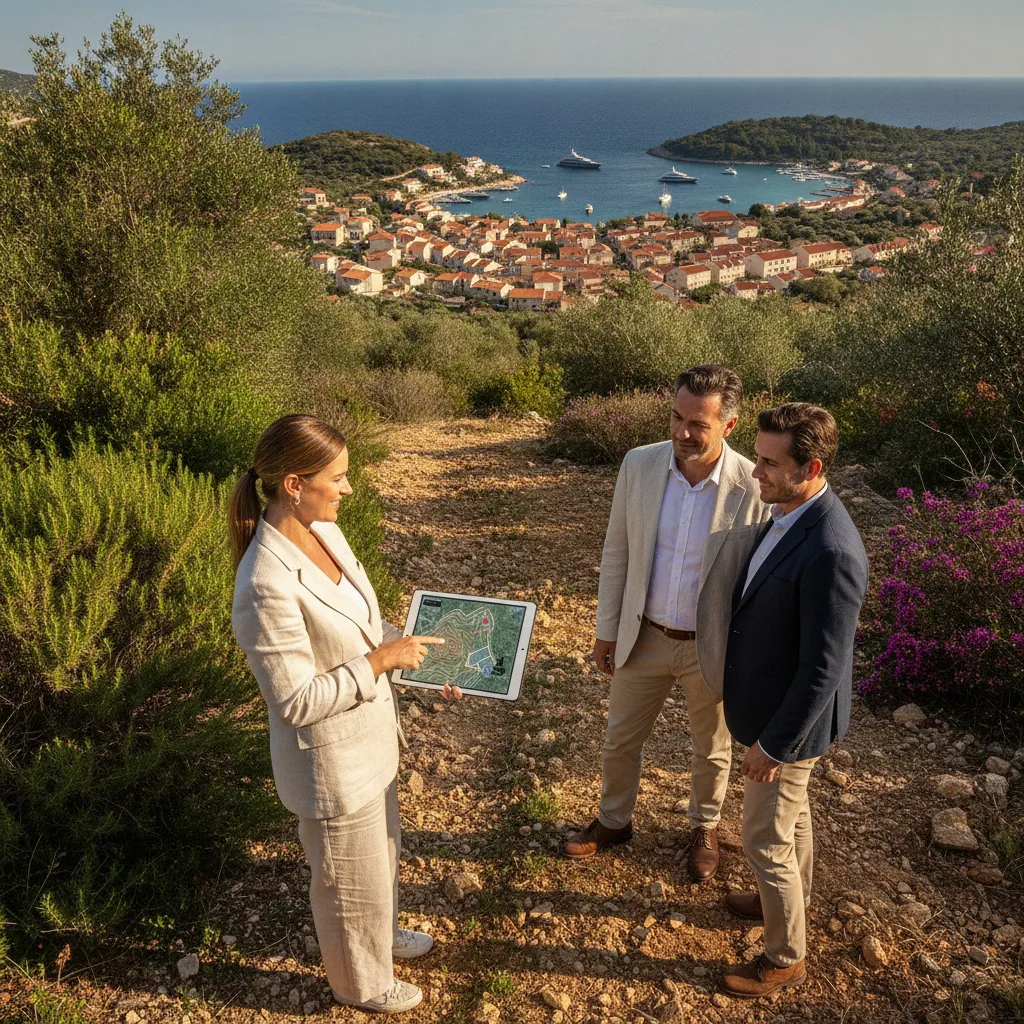
The second key document is the certificat d’urbanisme. An informational certificate summarises the planning rules and taxes that apply to the land. An operational certificate goes further, confirming whether a specific project, such as a single family villa of a given size, is feasible and whether the existing networks can serve it. For a building plot with sea view on the French Riviera, requesting an operational certificate before the sale is a sensible precaution.
Finally, check the cadastral plan and the property boundaries. Coastal hillsides often have irregular parcels, shared access roads and historic easements. A topographic survey carried out by a licensed surveyor confirms the exact surface, the slope and the boundaries, and it is the basis on which your architect will design the house.
Important
A plot sold with an existing building permit is not automatically safer. You should check that the permit is still valid, that it can be transferred to you, and that the period for third party appeals has expired.
Does the Loi Littoral Restrict Building Near the French Coast?
How the Coastal Law affects sea-view building land
It does, and significantly. The Loi Littoral, or French Coastal Law, protects the shoreline from uncontrolled development. In broad terms, it prohibits most new construction in the strip immediately along the shore outside already urbanised areas, it limits the extension of building in areas close to the shoreline, and it requires new development to remain in continuity with existing towns and villages. Remarkable natural sites are given additional protection.
On the Riviera, the consequences are visible. Much of the coastline between Nice and Monaco is already built, so genuinely new plots are rare, and those that remain are often located on hillsides above the sea rather than at the water’s edge. Some land is also owned by the Conservatoire du littoral, the public body that acquires coastal sites to preserve them permanently.
Other layers of protection can apply. Near historic monuments or in protected landscape and heritage areas, the Architectes des Bâtiments de France review the project and may impose requirements on volumes, materials, colours or roofing. This is common around villages such as Villefranche-sur-Mer, Èze or Saint-Jean-Cap-Ferrat, where landscape integration is closely monitored.
What Permits Are Needed to Build a House Near the Sea?
Building permits for a new Riviera villa
To build a new villa, you need a permis de construire (building permit) issued by the town hall. The application includes plans, elevations, a landscape integration study, photographs of the site and, depending on the location, additional studies on risks or thermal performance. If an old structure must be demolished, a demolition permit may also be required. Smaller works, such as certain pools or extensions, may fall under a simpler prior declaration, but this depends on the local rules.
Once granted, the permit must be displayed on the site, and neighbours and certain associations can contest it within a legal period. Many buyers therefore make the purchase conditional not only on obtaining the permit, but on that permit becoming final and free from appeal. Your notary and architect will help you structure this timeline.
Can a Permit Be Refused Because of Erosion, Landslide or Flood Risk?
Yes. On the Côte d’Azur, steep terrain, intense autumn rainfall and coastal exposure create real constraints. Each municipality may be covered by a Plan de Prévention des Risques Naturels (PPRN), which maps zones exposed to landslides, rockfalls, flooding, forest fires or marine submersion. In a red zone, construction is generally prohibited. In other zones, it is allowed under conditions, such as reinforced foundations, specific drainage or limits on the building footprint.
Before any offer, consult the official Géorisques platform, which gathers public information on natural and technological risks for a given address. Planning guidance in several coastal jurisdictions also stresses that projects must remain safe over their entire lifetime, taking into account erosion, landslides, storm exposure and sea-level rise, not only the current situation.
A geotechnical survey then assesses soil composition, slope stability and the type of foundations required. On sloped land, this study is often what determines whether the budget is realistic.
Can a Sea View Be Legally Protected From Future Construction?
This is one of the most frequent questions from buyers, and the answer requires nuance. French law does not grant a general right to a view. If the land below yours is buildable under the PLU, a neighbour may one day build within the limits allowed, and your panorama could change.
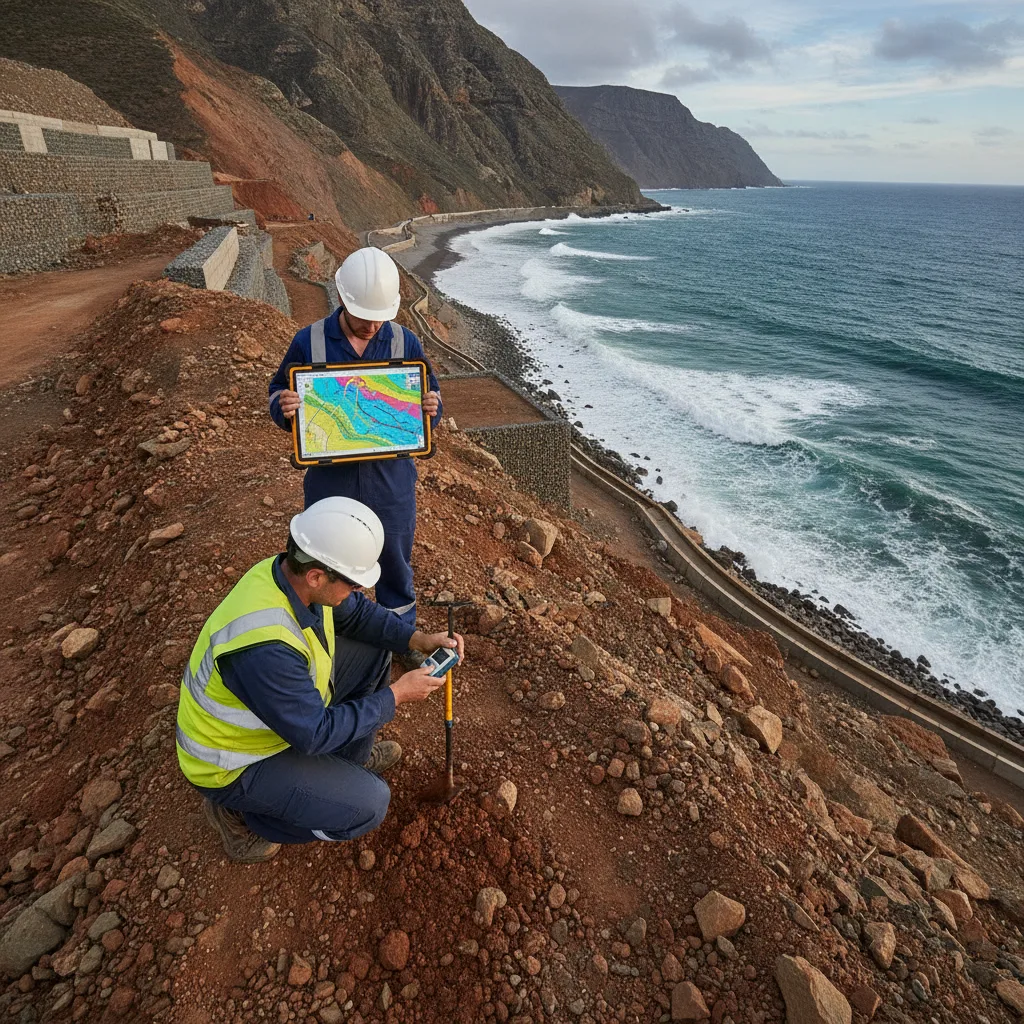
To assess the durability of a view, study the zoning of the surrounding parcels, their permitted building height and whether they are already built to capacity. Land classified as a natural zone, a protected site or property of the Conservatoire du littoral is far less likely to change. In some cases, it is possible to negotiate a private easement with a neighbour, such as a commitment not to build above a certain height, which is then recorded by a notary. Plot orientation and elevation also matter: a higher parcel looking over the tops of existing roofs generally offers a more resilient outlook than one relying on a single open lot.
It is also worth distinguishing a panoramic sea view from a partial one. A panoramic view embraces the bay and horizon, while a partial view may be framed between buildings or trees. Both have value, but they are not priced the same way, and the partial view is often more exposed to future changes.
Is It Better to Buy on the Coast or Inland With a Sea View?
The value of a plot depends on the combination of view, buildability, access, servicing and site safety, rather than proximity to the beach alone. A parcel slightly set back on the hillside may prove more attractive than one at the shoreline if it offers better stability, simpler access and lighter planning constraints. The comparison below summarises the main trade offs.
| Criterion | Plot close to the shoreline | Hillside or inland plot with sea view |
|---|---|---|
| Availability | Very rare, often in already built areas | More options in villages above the coast |
| Coastal Law constraints | Strongest restrictions on new building | Generally lighter, depending on the PLU |
| Main natural risks | Erosion, marine submersion, storm exposure | Landslides, slope instability, forest fires |
| Type of view | Close sea view, sometimes at eye level | Wide panoramic view, often over the bay |
| Access and servicing | Usually close to existing networks | Access roads and connections may need work |
| Construction complexity | Foundations adapted to coastal conditions | Earthworks and retaining walls on steep slopes |
What Are the Hidden Costs of Developing a Sloped Coastal Plot?
Typical extra costs on a sloped terrain
The purchase price is only one part of the budget. When you estimate the cost of building a house on the French Riviera, several items are often underestimated, particularly on sloped land. The main ones are the following:
- Geotechnical, topographic and, where required, environmental studies
- Earthworks, slope stability work and retaining walls
- Creation or improvement of the access road and parking areas
- Site servicing (viabilisation): connections to water, electricity, sewage and fibre, or an independent sewage system where mains drainage is unavailable
- Stormwater drainage and foundation reinforcement
- Architect and engineer fees, plus project management
- Notary fees and acquisition costs, local development tax and property tax
- Insurance during construction and maintenance of any protective structures
The amounts vary widely from one site to another, which is why quotes from local professionals should be obtained before you finalise your offer. Our guides on notary fees, property tax for non-residents and French mortgages for non-residents can help you prepare the broader budget.
Good to know
Visiting a plot at different times of day, and if possible after heavy rain, reveals details that photos never show, such as water runoff, sun exposure, road noise or how the view changes with the light.
Securing the Purchase: Compromis, Conditions and the Notary
The sale of land usually begins with a compromis de vente, a preliminary contract that commits both parties. For a construction project, its real protection lies in the conditions precedent you include. Before signing, it is wise to gather a precise set of documents and to make the sale conditional on several of them:
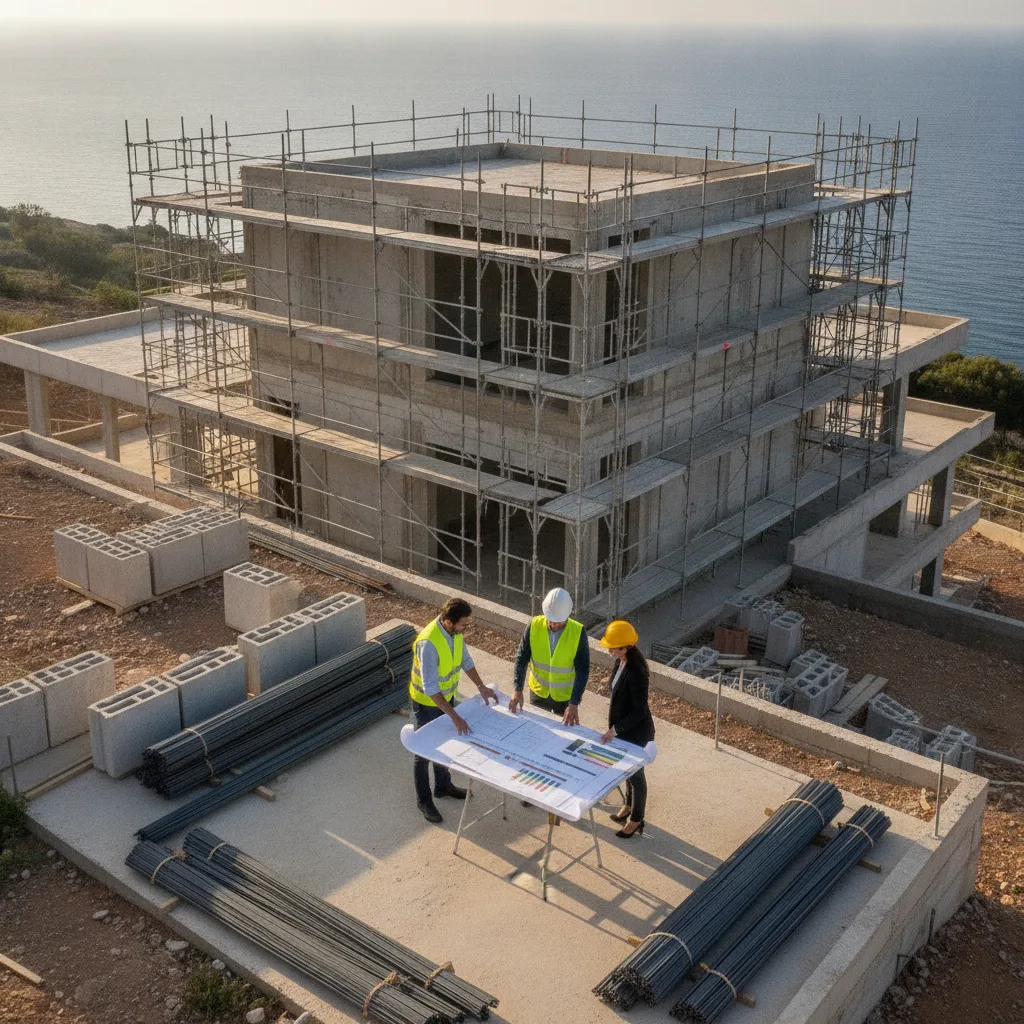
- Title deed, cadastral plan and boundary confirmation
- Operational certificat d’urbanisme or existing building permit
- Geotechnical survey and natural risk information from the PPRN and Géorisques
- Details of easements, rights of way and access arrangements
- Confirmation of available utility connections and their capacity
- Planning rules applying to neighbouring parcels
Typical conditions include obtaining a building permit for your project free from appeal, financing approval and satisfactory technical studies. The notary then verifies the legal situation, collects the taxes and signs the final deed of sale. Because each situation is different, the legal and tax aspects of your project should always be confirmed with your notary and advisors.
How Riviera King Helps You Find the Right Plot
Buildable land near the coast between Nice and Monaco is scarce, and the best opportunities are not always widely advertised. Our role is to identify plots that combine a real view with realistic buildability, and to filter out those whose constraints outweigh their appeal.
We have, for example, presented a building plot in Beaulieu-sur-Mer with cleared planning permission for a contemporary villa, as well as land offered with a permit for a villa and pool.
For our clients, we coordinate the early checks with local professionals, organise site visits, help gather planning documents and work alongside the notary throughout the transaction, in English. This allows you to evaluate a plot with clear information rather than with a listing photograph alone.
Turning a Sea-View Plot Into a Secure Home
A sea-view building plot on the French Riviera can become an exceptional home, provided it is evaluated for what it truly is: a planning, technical and legal project as much as a view. Checking the PLU, obtaining a certificat d’urbanisme, assessing risks, studying the durability of the outlook and budgeting for servicing are the steps that secure your investment.
If you are considering a construction project between Nice and Monaco, we would be pleased to discuss your criteria and help you identify the plots that match them.
FAQ
How long does it take to build a villa on the French Riviera?
The timeline depends on the design phase, the permit review, the appeal period and the complexity of the site. Sloped plots requiring major earthworks generally take longer. Your architect can give a realistic schedule once the project is defined.
Can I obtain a French mortgage to buy land as a non-resident?
Some French banks finance land and construction for non-resident buyers, subject to their own criteria. Lenders usually examine both the land purchase and the construction budget together. A specialised broker can help you compare options.
Do I need to be present in France to complete the purchase?
Not necessarily. The final deed can often be signed through a power of attorney prepared with the notary. You will still want to visit the site at least once before committing.
Can I build a swimming pool on a sea-view plot?
Often yes, but the PLU, the risk plan and any heritage rules may impose conditions on its location, size or appearance. On unstable slopes, the geotechnical study will also influence its feasibility.
Should I hire a French architect?
Working with an architect familiar with local planning rules and the Riviera’s terrain is strongly recommended. In France, using an architect is mandatory above a certain surface, and local experience helps anticipate the expectations of the town hall and heritage authorities.