

Building a pool on the Côte d’Azur often starts as a dream of long evenings with friends and quiet morning swims. Reality, however, arrives with the words permis de construire piscine and the maze of French urban planning. Owners quickly realise that the real challenge is not choosing tiles but navigating rules, local plans and timing. On the Côte d’Azur—where land is limited and landscapes protected—authorities are especially vigilant. A simple early mistake can mean delays, extra costs or even demolition, and it may complicate a future resale of your villa. This guide walks through the real-life journey of obtaining a pool permit, explains what you must check in your commune and shows how to protect both your project and the future value of your home.
Obtenir un Permis de Construire pour une Piscine sur la Côte d’Azur : Le Parcours du Combattant
Reading time : ~12 min
- Contents
- When a pool building permit is really required
- The administrative journey to obtain your pool permit
- Specific constraints on the Côte d’Azur that owners often ignore
- Why your pool permit matters for future resale
- To do and not to do before building your pool
- Mini FAQ about pool permits on the Côte d’Azur
When a pool building permit is really required
French rules on pool permits are national, with an extra layer of local rules through each commune’s PLU (local urban plan). For the Côte d’Azur this means you depend on the Code de l’urbanisme plus specific constraints in places such as Nice, Cannes, Cagnes-sur-Mer and La Ciotat.
| Situation | Surface / Enclosure | Required Form | Instruction Period* |
|---|---|---|---|
| No formalities | < 10 m², no fixed enclosure > 1.80 m | None (outside protected zones) | — |
| Prior declaration | 10 – 100 m² or above-ground > 10 m² kept > 3 months/yr | Form – Prior declaration | 1 month |
| Building permit | > 100 m², or fixed enclosure > 1.80 m, or indoor pool altering structure | Form – Permis de construire | 2 months |
*Periods can be extended if additional opinions (e.g., Architect of the Buildings of France) are required.
These national thresholds do not tell the full story on the Côte d’Azur. Local rules may impose specific distances to property lines, limits for earthworks or constraints linked to forest-fire risk or erosion. Always confirm details with your mairie.
The administrative journey to obtain your pool permit
Many owners describe the permit process as an obstacle course, yet it becomes manageable when taken step by step and when expectations of the mairie are anticipated.
Step 1 – Check local rules before you design the pool
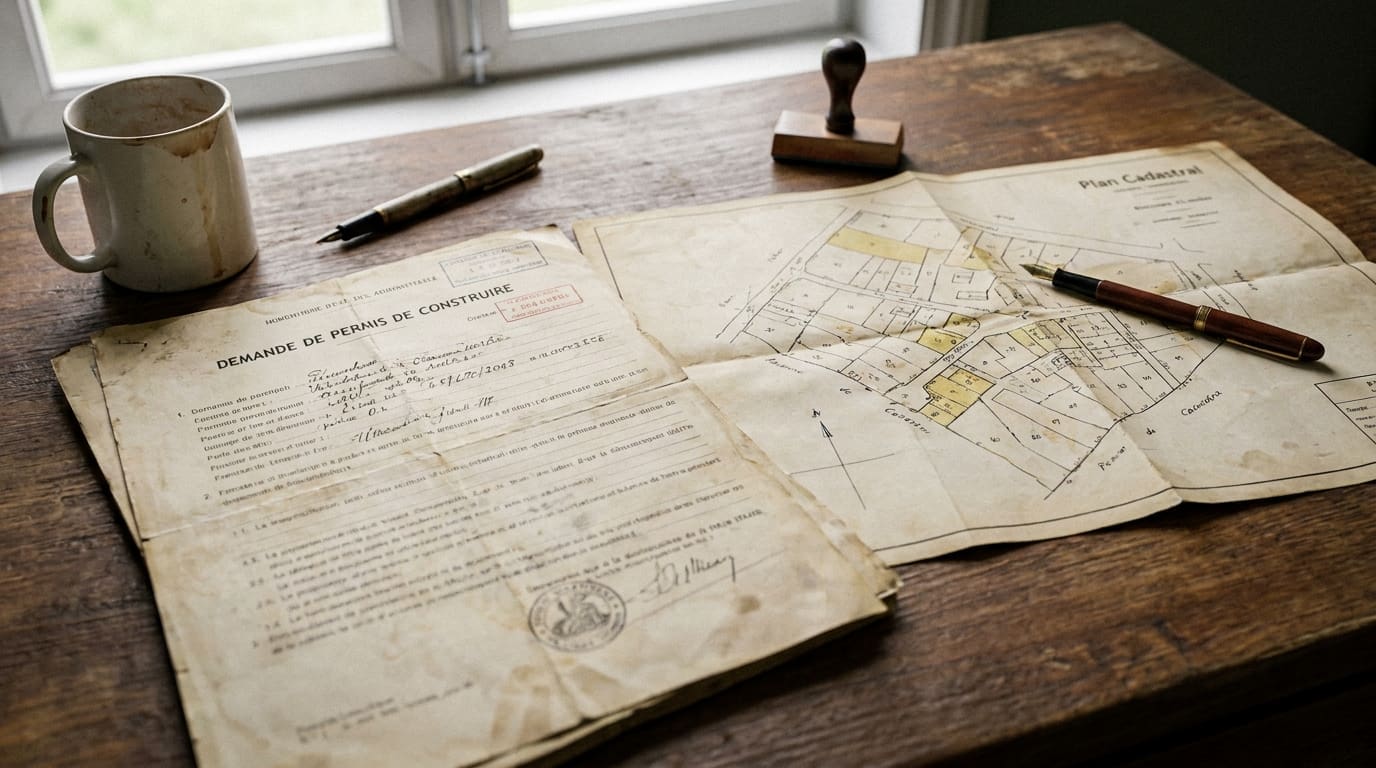
Contact your mairie for the PLU, protected-area maps, flood or risk information and clarify minimum distances to boundaries (often 3 – 5 m), limits on tree cutting or slope modification, and extra studies—hydrological or geotechnical—sometimes required on the Riviera.
Step 2 – Prepare a complete and convincing file
A complete dossier includes a location plan, detailed site plan, sections showing depth and slope, a descriptive note on materials, colours and safety, plus photos and a realistic visual integration. The law obliges one compliant safety device (barrier, alarm, cover or safety enclosure).
Step 3 – Submit the file to the mairie
Submission can be electronic, by registered mail or in person. Retain proof of deposit; it starts the instruction clock and supports any claim of tacit approval.
Step 4 – Manage the instruction period intelligently
The legal period is one month for a prior declaration and two months for a building permit. Respond rapidly to any request for additional documents. Once granted, display the information panel on site; photograph it at the beginning and end of the contestation period to protect yourself.
Step 5 – Start works and close the file correctly
A permit is valid for three years; works must begin within this time and not be interrupted too long. At completion, declare the works finished and compliant. Banks, notaries and future buyers often ask for this proof.
Specific constraints on the Côte d’Azur that owners often ignore
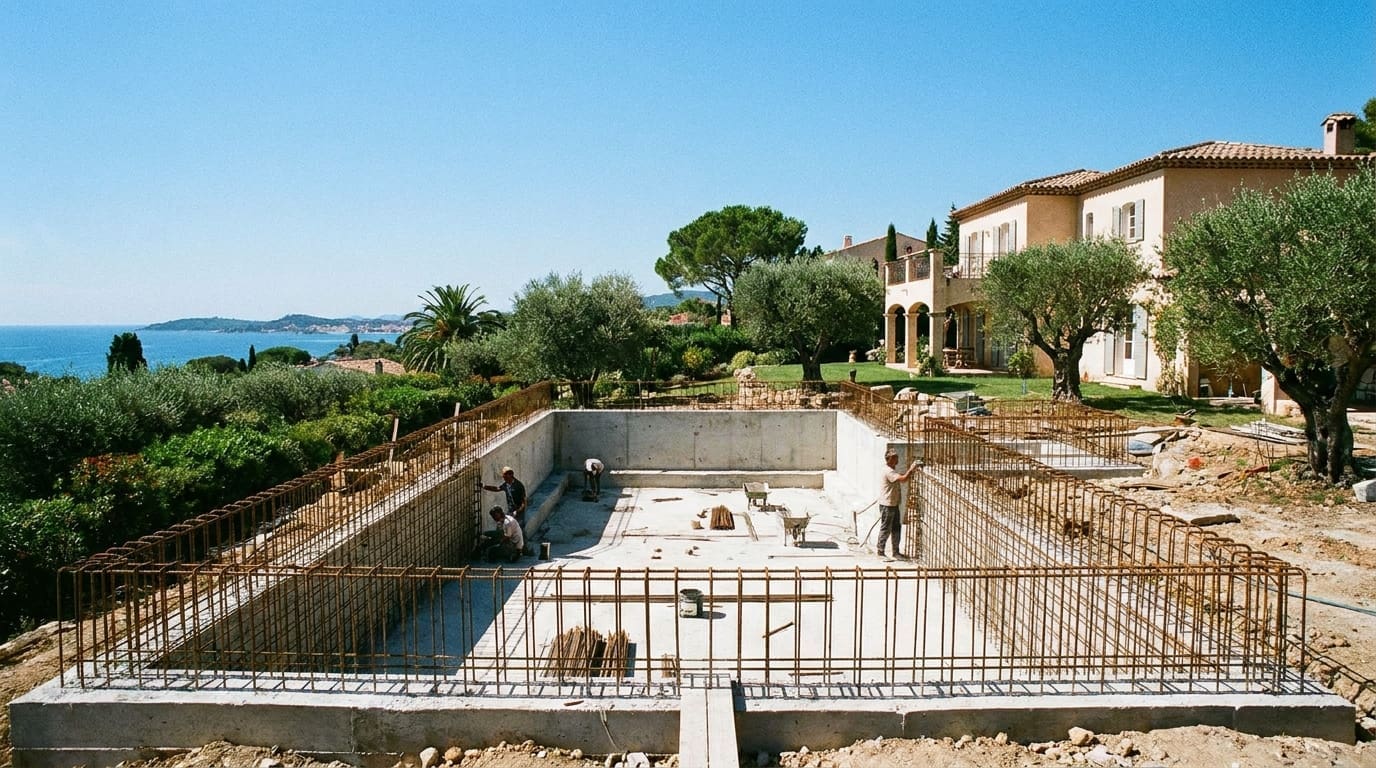
The Riviera’s beauty comes with strict rules. Pools must not harm sea views or degrade hillsides when seen from key viewpoints. Risk zones—flood, landslide or forest fire—can limit size or position, or require special techniques. In densely built areas, distance to neighbours and noise are sensitive; thoughtful placement and plant screening help acceptance. Even above-ground pools may need authorisation if installed most of the year or combined with a high rigid enclosure. With many annual applications, communes enforce rules strictly; a clean, coherent file demonstrating respect for safety and neighbours is essential.
Why your pool permit matters for future resale
An unauthorised or undeclared pool exposes you to fines and potential demolition, and complicates every stage of selling. Notaries compare the real state of the property with official documents; missing permits raise red flags. Buyers may insist on regularisation, negotiate price reductions or abandon the purchase. Even with the correct permit, absence of the final completion declaration creates uncertainty. Clarifying the administrative situation before marketing is one of the smartest moves. Before you list, consider requesting a detailed sale estimate to gauge the market impact of any compliance issues.
How an exclusive mandate and MLS approach protect your interests
Entrusting your property to one agency through an exclusive mandate gives you a single dedicated contact who understands your home’s history—including pool permits—and shares the listing across the MLS Côte d’Azur network of over 2 000 professionals. You gain:
• A unified strategy for presenting pool features, recent permits and safety systems.
• Assistance gathering administrative documents requested by buyers and notaries.
• Maximum visibility on major French property portals and specialist Riviera sites.
This approach is particularly valuable for properties with recent or complex works such as a new pool, reducing last-minute surprises, shortening sale times and strengthening negotiation.
To do and not to do before building your pool
| Do | Don’t |
|---|---|
| Consult the mairie before signing with a pool builder and review the PLU for distances, surfaces and protected zones. | Start excavation thinking you will regularise later; refusals and heavy penalties are common. |
| Plan safety early by selecting a compliant device and include it in your file. | Rely solely on neighbours’ experiences; rules evolve and vary by parcel. |
| Keep complete records—forms, plans, permit-display photos, correspondence. | Underestimate visual impact; on the Riviera, low-balled earthworks or enclosure data often cause refusals. |
| If sale is likely within a few years, discuss the project with a Riviera-savvy real-estate advisor. | Forget to file the completion declaration; missing it unsettles future buyers. |
| Multiply agencies without coordination; one trusted partner with MLS access is more effective. |
Mini FAQ about pool permits on the Côte d’Azur
Can I build a small pool without any permit at all?
Yes, if the water surface is under 10 m², without a fixed enclosure higher than 1.80 m and outside a protected zone, no formalities are usually required. You must still respect local distances and safety rules, and it is wise to confirm with the mairie before starting.
How long does it take to obtain a pool building permit?
The standard period is two months after the mairie deems your building-permit file complete; one month for a prior declaration. Periods may be extended in protected areas or if extra opinions are needed.
Do I need an architect for a private pool?
The law does not always require one for a simple private pool on an existing house, but on the Côte d’Azur consulting an architect is often useful. Quality plans and visuals that respect the landscape make approval easier and later enhance property presentation.
What happens if I built my pool years ago without any permit?
The situation should not be ignored. Regularisation through a new file may be possible, but approval is not automatic. If the pool violates current rules, modifications or removal—and financial penalties—may follow. Clarify status with professional advice before selling.
Does the permit affect my taxes?
Yes. Adding a pool usually increases the taxable surface of the property. After completion, declare the change to the tax authorities; accurate administrative documents make this step straightforward.
Key takeaways for your Côte d’Azur pool permit
Bringing a pool project to life on the Côte d’Azur means managing legal thresholds, local rules, neighbour concerns and future resale all at once. With the right information, a structured approach to the permis de construire piscine and support from professionals who understand both urbanism and the market, you can transform the obstacle course into a controlled, predictable process that adds real value to your property. To explore how we can support both your pool project today and a potential sale tomorrow, visit our English site at Riviera King Real Estate.


